
The bedroom is the one room where the goal is not to impress anyone. It is the last place you see at night and the first thing you wake up to, so the art on the walls should help you wind down, not wake you up. That changes the whole approach. A loud gallery wall that looks great in a living room can feel like too much over a bed.
Good bedroom wall art ideas tend to follow a few simple rules: a softer palette, the right scale above the bed, and styles that read as quiet rather than busy. None of it is complicated once you know what to look for. Below is a room-by-room walkthrough of how to choose and hang bedroom wall art that actually makes the space feel calmer.
Start with a calming palette
Color sets the mood before you notice anything else in the piece. For a bedroom, you want shades that lower the energy in the room. A few palettes that almost always work:
- Sage and soft greens. Easy on the eyes and they pair with wood furniture and white bedding without trying too hard.
- Muted blues. Blue is the classic restful color, and a hazy seascape or an abstract in dusty blue tones keeps the room feeling cool and open. Pieces from a blue-toned wall art collection are a safe starting point if you are not sure where to begin.
- Neutrals and earth tones. Warm taupe, sand, terracotta, and off-white read as cozy. A neutral art piece rarely fights with anything else you already own.
The trick is to pull one or two colors from what is already in the room, usually the bedding or the curtains, and let the art echo them. You do not need an exact match. A piece that lives in the same color family as your linens will feel intentional instead of random.


What to hang above the bed
The space above the headboard is the anchor wall, and it is where most people get the size wrong. The fix is one number: your art should span roughly two-thirds the width of the bed. A queen headboard is about 60 inches wide, so you are looking for a piece (or arrangement) around 40 inches across. Anything much smaller floats and looks lost.
You have two ways to fill that width:
- One large statement canvas. The simplest, cleanest option. One horizontal piece centered over the bed does all the work and keeps the wall uncluttered.
- A set of two or three. A diptych or triptych spreads across the same span and adds a little rhythm. Keep the gap between panels tight, around 2 to 4 inches, so the set reads as one unit rather than separate pictures.
Either way, center the arrangement on the bed, not on the wall. The bed is the focal point, so the art should line up with it even if that leaves uneven space on the sides.
Art size by bed size
If you would rather skip the math, here is the quick version. Measure your bed width, take roughly two-thirds of it for a single piece, and use the same total span (including the gaps) if you go with a set of three.
| Bed size | Single piece width | Set of 3 total width |
|---|---|---|
| Twin (38 in) | 24 to 28 in | 26 to 30 in |
| Full (54 in) | 34 to 38 in | 36 to 40 in |
| Queen (60 in) | 40 to 44 in | 42 to 48 in |
| King (76 in) | 50 to 56 in | 54 to 60 in |
| Cal King (72 in) | 48 to 54 in | 52 to 58 in |
Treat these as a starting range, not a hard rule. A tall headboard or a bench at the foot of the bed can shift what looks balanced, so the paper test below is still worth doing.
Tip: Before you hang anything, cut a piece of kraft paper or newspaper to the size of your art and tape it above the bed. Live with it for a day. It is a five-minute test that saves you from a wall full of nail holes in the wrong spots.
Styles that suit a bedroom
Some art styles just sit better in a room built for rest. These are the ones worth leaning into:
- Botanical and nature. Leaves, branches, pressed-flower prints, and soft florals bring a bit of the outdoors in without shouting. A botanical canvas works in almost any bedroom style, from modern to farmhouse.
- Abstract. Soft, flowing shapes in muted tones give your eye something to settle on without telling a busy story. Abstracts are forgiving because there is no "subject" to clash with the room.
- Minimalist. Line art, single-color fields, and lots of negative space keep the wall quiet. If your bedroom already has a lot going on, minimalist art is the relief valve.
- Landscape. A wide, hazy horizon (mountains, coast, open fields) creates a sense of depth and calm, almost like a window. Horizontal landscapes are a natural fit for the wide space above a bed.
You can mix these, but pick a lane for the main wall and let the rest of the room support it. A minimalist line drawing over the bed and a small botanical print on the dresser play together nicely. Four competing styles on one wall do not.

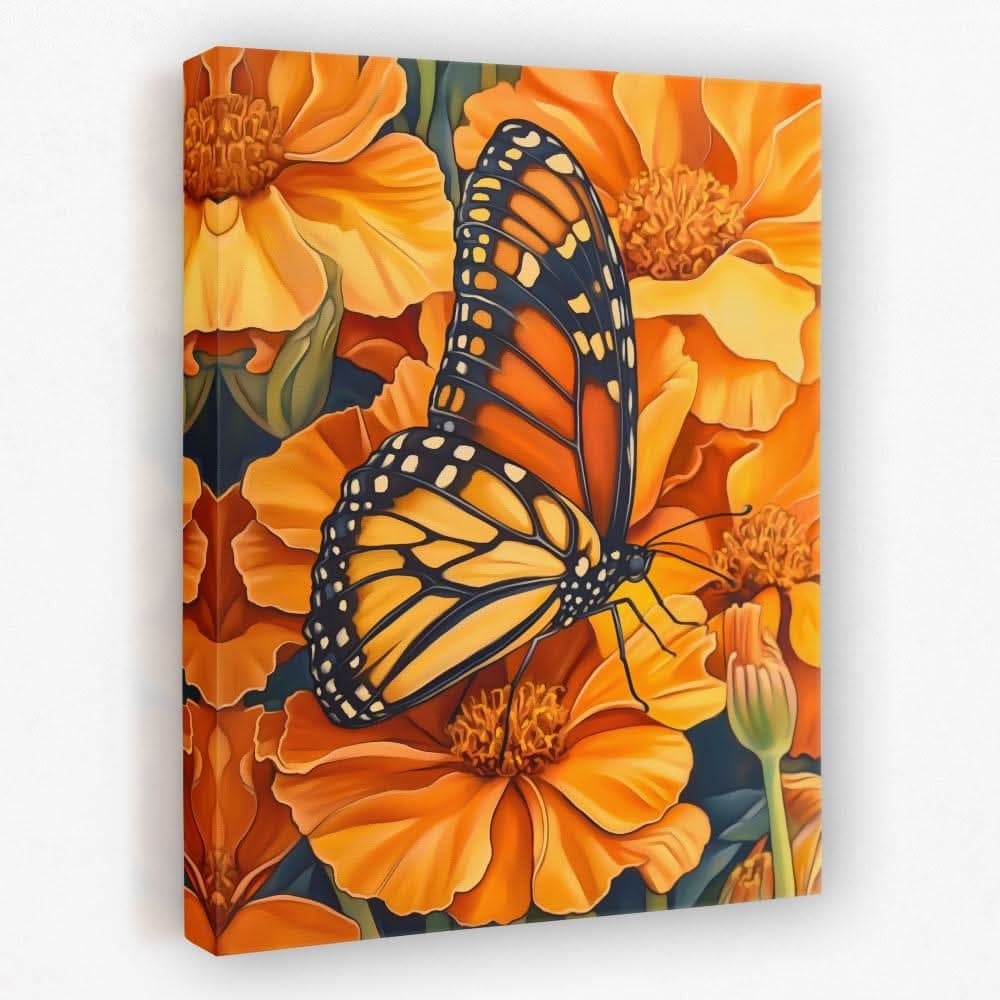
A quiet, nature-leaning piece that brings a soft focal point over a bed without adding visual noise.
View this piecePlacement beyond the bed
The wall above the headboard gets all the attention, but it is not the only spot worth styling. A few other places to consider:
- Over a dresser. A single piece or a stacked pair above a dresser balances the furniture and gives the eye a second place to land. Keep the bottom of the art 6 to 10 inches above the dresser top so it relates to the furniture instead of floating.
- A small gallery wall. If you want a collection, the wall beside the bed or a blank corner is a better home than directly over the headboard, where too many frames can feel cluttered. Keep the palette consistent so it still reads as calm.
- Flanking the bed. A matched pair on either side of the headboard, hung at the same height, frames the bed and creates a tidy, symmetrical look.
- The wall you face from bed. Do not forget the view from your pillow. The wall opposite the bed is the one you actually look at most, so a piece you genuinely love belongs there.
Two of these spots, the gallery wall and the matched pair beside the bed, are exactly where our free tools help. Use the gallery wall planner to plan an above-bed gallery before you buy, drop your favorites into the room visualizer to preview them in your room, and run the numbers through the size calculator to get the size right for your bed.
Canvas or framed for a bedroom
Both work, and the choice mostly comes down to the look you want and the upkeep you are willing to do.
- Canvas reads as soft and casual. There is no glass to catch glare from a bedside lamp or a window, which matters in a room where lighting is often low and angled. It is lighter, easier to hang, and the matte surface keeps things relaxed. For most bedrooms, a gallery-wrapped canvas is the easy answer.
- Framed prints feel a touch more formal and polished. A clean frame can sharpen a minimalist or botanical piece. The tradeoff is glass glare and a bit more weight on the wall.
If you want the room to feel laid back and you hate fussing with glare, go canvas. If you are after a crisper, more tailored look, a simple frame in a finish that matches your other hardware does the job.
Mistakes to avoid
A few habits quietly undo an otherwise good choice:
- Hanging too small. The single most common error. Undersized art over a wide bed looks like an afterthought. Go bigger than feels comfortable.
- Hanging too high. Art creeps up the wall when there is no furniture to anchor it. Aim for the center of the piece at roughly eye level, about 57 to 60 inches from the floor, and lower if it sits above a headboard.
- Too much color or chaos. A high-contrast, neon, or super-busy piece keeps your brain switched on. Save the bold stuff for rooms where you want energy.
- Matching everything exactly. Art that matches the bedding seam for seam looks like a showroom, not a home. Echo the colors, do not clone them.
- Ignoring scale on the other walls. One giant piece and then tiny scattered prints elsewhere throws the room off. Keep proportions in the same ballpark across walls.
More bedroom wall art picks


Putting it together
Styling a bedroom is less about finding the perfect piece and more about keeping things calm and correctly sized. Pick a soft palette pulled from your bedding, hang one large piece or a tight set about two-thirds the width of the bed, lean toward botanical, abstract, minimalist, or landscape styles, and resist the urge to overfill the walls. Get those few things right and the room does the rest.
When you are ready to find the piece that pulls your room together, browse our bedroom wall art collection and start with the colors you already love waking up to.