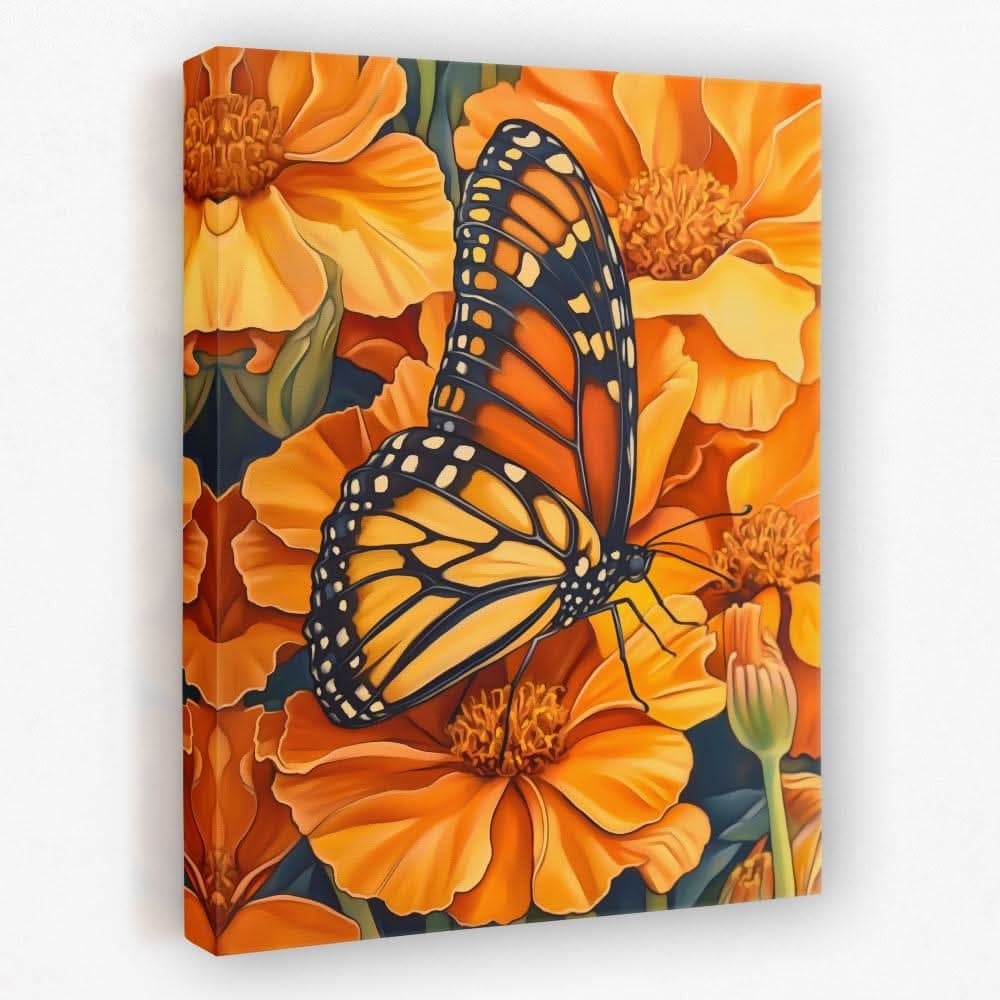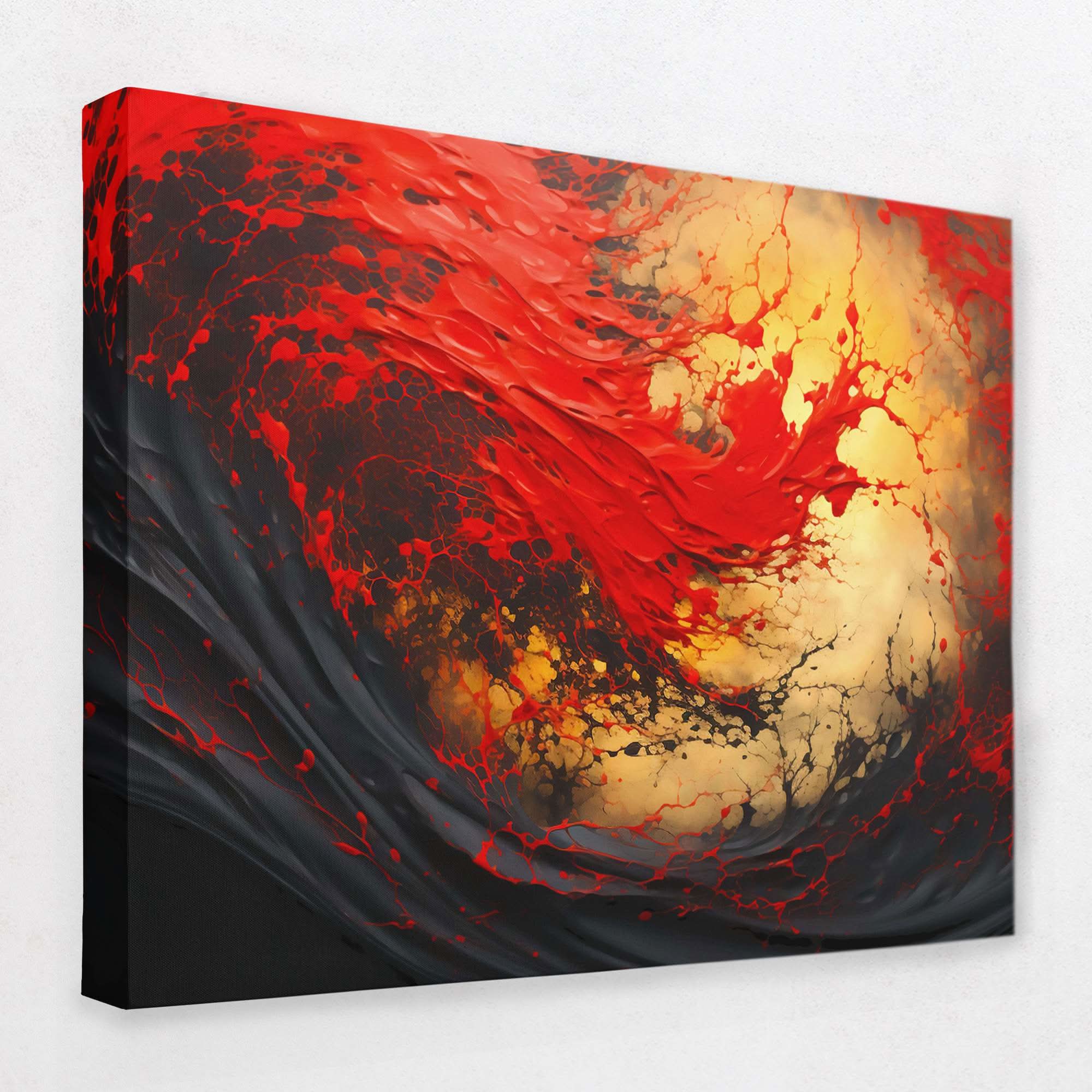

The living room is the wall most people get wrong. It is the biggest open space in the house, usually anchored by a sofa, and it is where guests look first. Hang the right living room wall art and the room reads finished. Hang something too small, or float it too high, and the whole space feels like it is still waiting on the last delivery.
This guide covers the rules that actually matter: how wide a piece should be over the sofa, how high to hang it, when a single canvas beats a gallery wall, and which styles hold up in a busy room. None of it is complicated once you know the numbers.
If you would rather skip the math, our size calculator takes your sofa width and gives you a target canvas size in a few seconds.
The above-the-sofa rule (this one matters most)
Most living room art hangs over the sofa, so start there. Two numbers do almost all the work.
Width. Your art, or your full set, should span roughly two thirds to three quarters of the sofa width. A standard 84 inch sofa wants art (or a grouping) around 56 to 63 inches wide. Anything narrower than half the sofa looks like a stamp on an envelope.
Height above the sofa. Leave 6 to 10 inches of breathing room between the top of the sofa back and the bottom of the frame. Closer than 6 inches and it feels cramped, higher than 10 and the art drifts off on its own, disconnected from the furniture below it.
Measure your sofa first, then shop to that number. It is far easier to pick art for a known width than to guess a size and hope it lands. Painter's tape on the wall in the planned outline takes two minutes and saves a return.
Single statement, gallery wall, or triptych
There are three layouts that work over a sofa, and the right one depends on how much wall you have and how calm you want the room to feel.
- Single statement piece. One large canvas. The cleanest, most modern look, and the easiest to hang because there is only one nail to get right. Best for big walls and minimal rooms.
- Triptych or set. One image split across two or three panels, or a coordinated set. Fills width without the busy feel of many small frames, and the panels read as a single unit.
- Gallery wall. A grouping of several pieces in mixed sizes. The most personal and the most forgiving of odd wall shapes, but it takes planning so it does not look like clutter.
For the gallery route, lay everything on the floor first and arrange it before a single hole goes in the wall. Our gallery wall planner lets you mock up the spacing on screen instead. We go deep on multi-frame layouts in our guide to gallery wall canvas prints.


What to hang above the sofa, by sofa size
Here is the cheat sheet. Find your sofa width, then pick either a single piece in the listed width or a set that adds up to it. These are target sizes, so round to the nearest canvas you like.
| Sofa width | Single piece width | 2 or 3 panel set width |
|---|---|---|
| 60 in (loveseat) | 36 to 42 in | 40 to 45 in total |
| 72 in | 42 to 50 in | 48 to 54 in total |
| 84 in (standard) | 50 to 60 in | 56 to 63 in total |
| 96 in | 56 to 66 in | 64 to 72 in total |
| 108 in (sectional) | 60 to 72 in | 72 to 84 in total |
Sets fill width with a little spacing between panels, so a three panel set runs slightly wider than a single piece for the same sofa. Keep panel gaps tight, about 2 to 4 inches, so the group reads as one.
Scale for big walls and high ceilings
Open-plan living rooms and tall walls eat normal-sized art alive. If you have a two-story wall or a long blank stretch, size up more than feels comfortable. A piece that looks huge leaning against the wall almost always looks right once it is up and surrounded by space.
For walls taller than nine feet, stack a set vertically or go with one oversized canvas rather than a row of medium frames that strands a sea of empty paint above them. We break down the oversized approach in our large canvas art for the living room guide.

Style options that hold up in a living room
The living room sees the most traffic and the most moods, so the art has to work in daylight and lamplight both. A few directions that reliably land:
- Abstract and modern. The safest pick for a shared space because it adds color and movement without committing to a literal subject. Browse the abstract and modern collection for pieces that pull a palette together.
- Landscape and nature. Calming, wide format, and great over a horizontal sofa. The landscape collection has the panoramic shapes that fit the space well.
- Black and gold. A warm, upscale look that reads luxe under evening light and pairs with neutral furniture.
- Coastal. Soft blues, sandy neutrals, and an airy feel for lighter, brighter rooms.
You do not need to match one style across the whole house. You do need each piece to make sense with the sofa, the rug, and the light in that one room.
Anchor the color to your sofa and rug
Art does not float in a vacuum. The fastest way to make a piece look like it belongs is to pull a color out of something already in the room, usually the sofa, the rug, or a throw pillow, and let the canvas echo it.
You do not need an exact match. A canvas with a deep blue accent next to a navy throw, or warm gold tones picking up a brass lamp, ties the room together without looking themed. If the room is mostly neutral, the art can be the one place color comes from. If the room is already busy, lean on calmer, tonal art so the wall settles things down instead of adding to the noise.
More living room wall art picks


Hanging height and framing
When art is not over furniture, hang it so the center sits at about 57 to 60 inches from the floor, which is standard eye level. Over a sofa, ignore eye level and use the 6 to 10 inch rule above the sofa back instead, since the furniture sets the reference point.
On framing: a clean floating frame or a gallery-wrapped canvas suits most modern living rooms, where a heavy ornate frame can fight the furniture. Match metal frame tones to the metals already in the room, brass with brass, black with black hardware. For a set, keep every frame identical so the eye reads the group as one object.
Common mistakes to avoid
Almost every living room wall problem comes down to the same handful of errors:
- Too small. The number one mistake. A piece that does not reach two thirds of the sofa width looks lost. Size up.
- Hung too high. Art that floats far above the sofa loses its connection to the room. Keep it within 10 inches of the sofa back.
- Wrong shape for the wall. A square piece on a long horizontal wall leaves dead space. Match the shape of the art to the shape of the gap.
- Uneven gallery spacing. Inconsistent gaps make a gallery wall look accidental. Pick one gap size, 2 to 3 inches, and hold it everywhere.
- No color link. Art that shares nothing with the room reads as bolted on. Echo one color from the sofa or rug.
Get the size and height right and the rest is style preference. Start from your sofa width, aim for two thirds, and browse the full living room wall art collection once you know your target size.