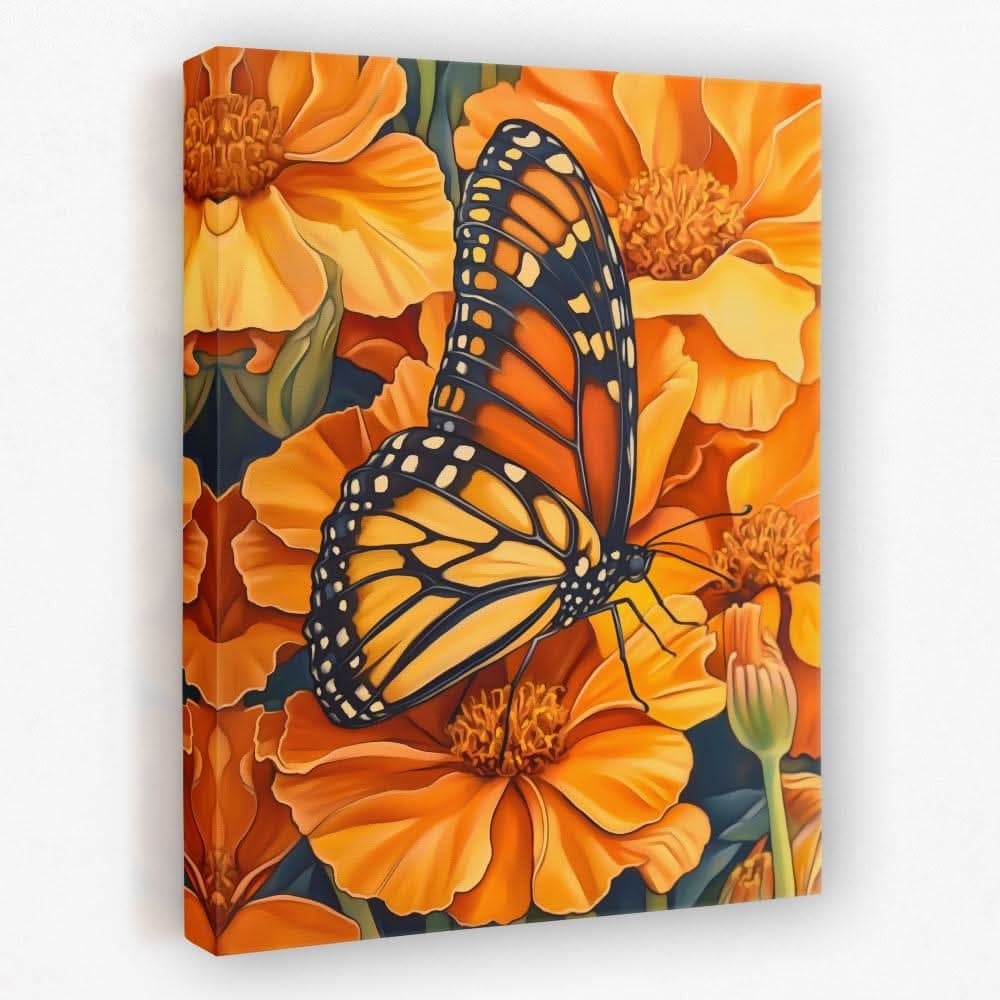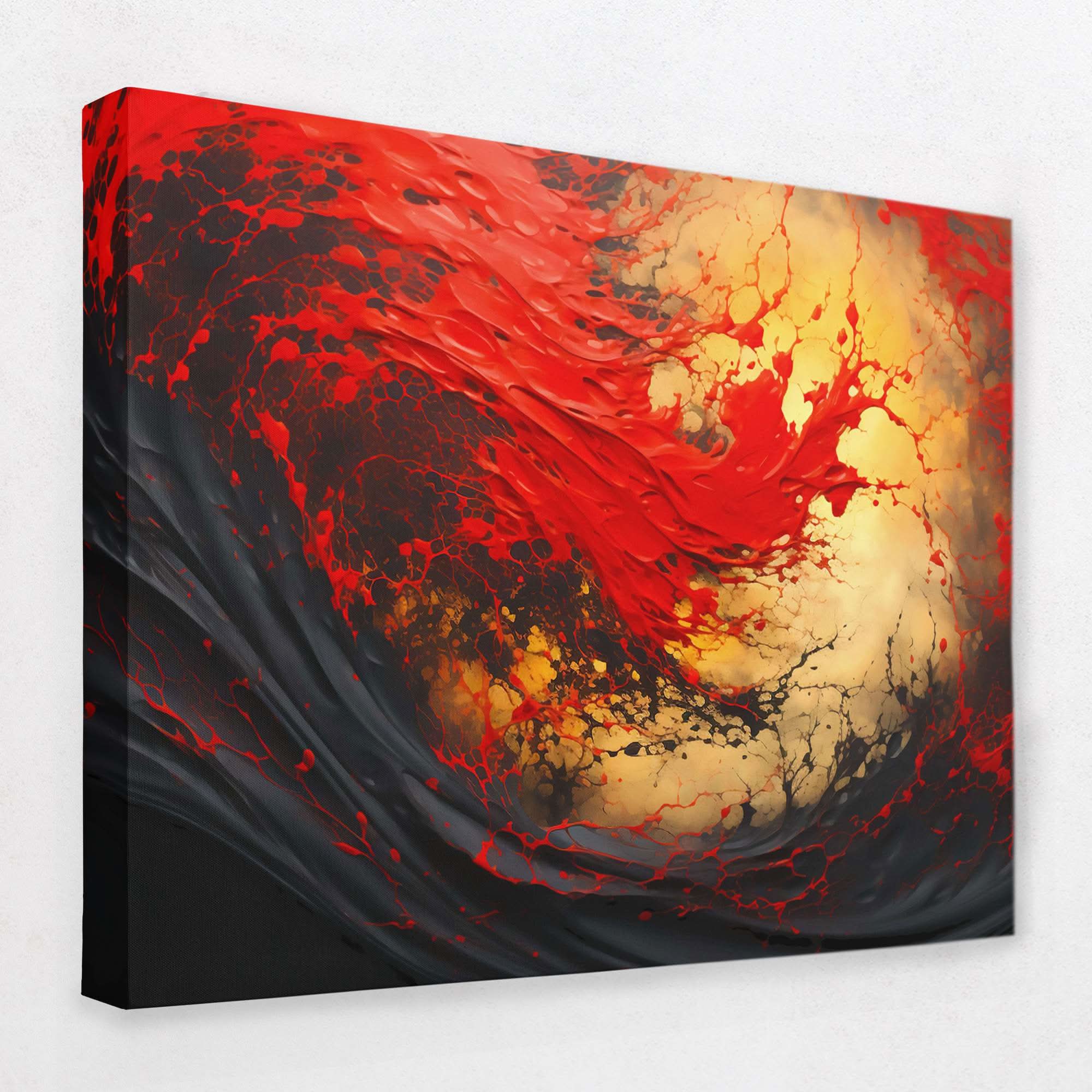

The dining room is where people sit down, slow down, and actually look at each other. That makes it one of the best rooms in the house for art, because everyone is seated and facing a wall for the length of a meal. The right piece sets the mood before the first plate lands.
Good dining room wall art does two jobs. It warms the room so it feels inviting instead of formal and stiff, and it gives guests something to react to. A bold abstract, a moody landscape, or a single statement canvas can start more conversation than any centerpiece. This guide covers what to hang, how big, how high, and how to match it to the way you actually dine.
We will keep it practical. Subject choices, sizing for the main wall and the spot above a sideboard, the seated eye-level rule, single versus gallery versus statement, and a quick style chart for formal, modern, casual, and farmhouse rooms.
Start with the mood you want
Before you pick a subject, decide how the room should feel. Dining is social, so most people want warm and inviting over cold and clinical. Warm palettes (amber, terracotta, deep red, gold, soft green) make a space feel like dinner is meant to last. Cooler palettes (blue, charcoal, slate) read calm and refined, which suits a more formal table.
A few mood directions that work well in dining rooms:
- Warm and convivial: rich abstracts, sunset landscapes, anything with gold or amber. Easy to talk over.
- Refined and quiet: minimalist lines, soft neutrals, a single botanical. Lets the food and table do the talking.
- Conversation-starting: a striking animal portrait or an unexpected subject that guests notice and ask about.
- Appetite-friendly: wine, food, citrus, and botanical themes feel natural in a space built around eating.
You do not need to overthink it. Pick a feeling, then choose art that leans into it. Our dining room wall art collection is sorted around exactly these moods.
Subjects that work over a dining table
Some themes just belong in a dining room because they connect to food, gathering, or the kind of calm you want at the table. The strongest options:
- Abstract and modern: the most flexible choice. Color and movement add energy without competing with the table setting.
- Wine, fruit, and food: a classic for a reason. Citrus, grapes, and botanical produce feel right where people eat.
- Botanical and floral: soft, fresh, and seasonal. Great for casual and farmhouse rooms.
- Black and gold for formal rooms: nothing dresses a dining wall faster. A dark, glossy piece with gold reads expensive and pairs with candlelight.
- Landscapes: a wide horizon or moody mountain scene gives the room depth and a calm focal point.
For a formal dining room, lean into our black and gold wall art for that dressed-up, candlelit feel. For everyday rooms, abstract and botanical pieces keep things relaxed.


Sizing the main wall
The biggest mistake in dining rooms is art that is too small. A lonely 16x20 on a wide wall looks like an afterthought. The fix is simple math.
For the main feature wall, the art (single piece or grouped set) should fill two-thirds to three-quarters of the open wall width. If your wall is 90 inches wide, you want roughly 60 to 70 inches of art across. Go big. Dining rooms can handle a large statement piece because you are usually viewing it from across the room.
- Small wall (up to 5 ft): one 24x36 portrait piece or a tight pair.
- Medium wall (6 to 8 ft): a 40x30 statement canvas or a three-piece set.
- Large wall (9 ft and up): a 60x40 statement piece or a generous gallery wall.
Above the sideboard or buffet
The wall above a sideboard, buffet, or console has its own rule. Here the art should be sized to the furniture, not the whole wall. Aim for art that is two-thirds to the full width of the furniture below it, never wider than the piece itself.
Leave 6 to 10 inches of breathing room between the top of the sideboard and the bottom of the frame. Any higher and the art floats off on its own. This is also the perfect spot for a pair or a small gallery cluster, since the furniture grounds the whole arrangement.
If your sideboard holds lamps, a mirror, or tall decor, hang the art a little higher so objects do not visually crash into the frame. Stand back and check the gap looks even from across the room.
Hang it at seated eye level
Here is the detail that separates a polished dining room from an off one: height. The standard gallery rule puts the center of art at 57 to 60 inches for a standing viewer. In a dining room, your guests are sitting down.
Hang dining art slightly lower so the center sits around 54 to 58 inches from the floor, closer to seated eye level. The art should feel like it belongs to the table, not to someone walking past. On a feature wall with no furniture under it, you can split the difference and aim for about 57 inches. Over a sideboard, let the furniture set the height and keep that 6 to 10 inch gap.

Single, gallery, or one large statement
Three layouts cover almost every dining room, and the right one depends on your wall and how busy you want it to feel.
- One large statement: the cleanest look. A single big canvas on the feature wall reads calm and confident, and it is the easiest to hang well. Best for modern and formal rooms.
- A pair or triptych: balanced and symmetrical, great above a sideboard or on a wide wall. A set of two or three keeps the eye moving without clutter.
- Gallery wall: the most casual and personal. Mix sizes around a central anchor piece. Best for farmhouse and relaxed family dining rooms, but it takes more planning to keep tidy.
If you are unsure, start with one large statement. It is forgiving, it photographs well, and you can always add pieces later. Browse single statement options in the dining room collection.
Match the art to your dining style
A formal dining room and a casual eat-in kitchen want very different art. Here is how the main styles break down so you can match palette, subject, and framing to the room you actually have.
| Dining style | Best art | Palette | Framing |
|---|---|---|---|
| Formal | Black and gold, classic landscapes, single statement | Dark, gold, deep jewel tones | Slim black or gold frame |
| Modern | Abstract, minimalist, large single canvas | Neutral with one accent color | Frameless canvas or thin black |
| Casual | Food and wine, botanical, colorful abstract | Warm and bright, mixed | Natural wood or frameless |
| Farmhouse | Botanical, animals, gallery wall sets | Soft neutrals, sage, cream | Distressed wood or white frame |
Color to complement the table and chairs
The art should talk to the furniture, not fight it. Pull one color from your table, chairs, or rug and echo it in the art. If your chairs are deep green, a piece with a touch of green ties the room together instantly. If everything is wood and neutral, the art is your chance to add the one bold color the room is missing.
A few quick rules on color and framing:
- Repeat one accent: matching a single color from the chairs or rug makes the room feel designed.
- Contrast for drama: dark art on a light wall (or the reverse) gives a formal room real presence.
- Frame to the woodwork: match the frame tone to your table or trim for a pulled-together look.
- Frameless canvas for modern: a gallery-wrapped canvas keeps clean, contemporary rooms uncluttered.
The same warm-color logic that works here works next door, which is why dining and living spaces often share a palette. If your rooms flow together, coordinate with pieces from our living room wall art range so the two spaces feel connected.
More dining room picks


Pick the mood first, size it generously, hang it for seated guests, and let the color nod to your table. Do that and the wall behind the meal becomes the thing everyone remembers. Start with a single statement piece you love and build from there.