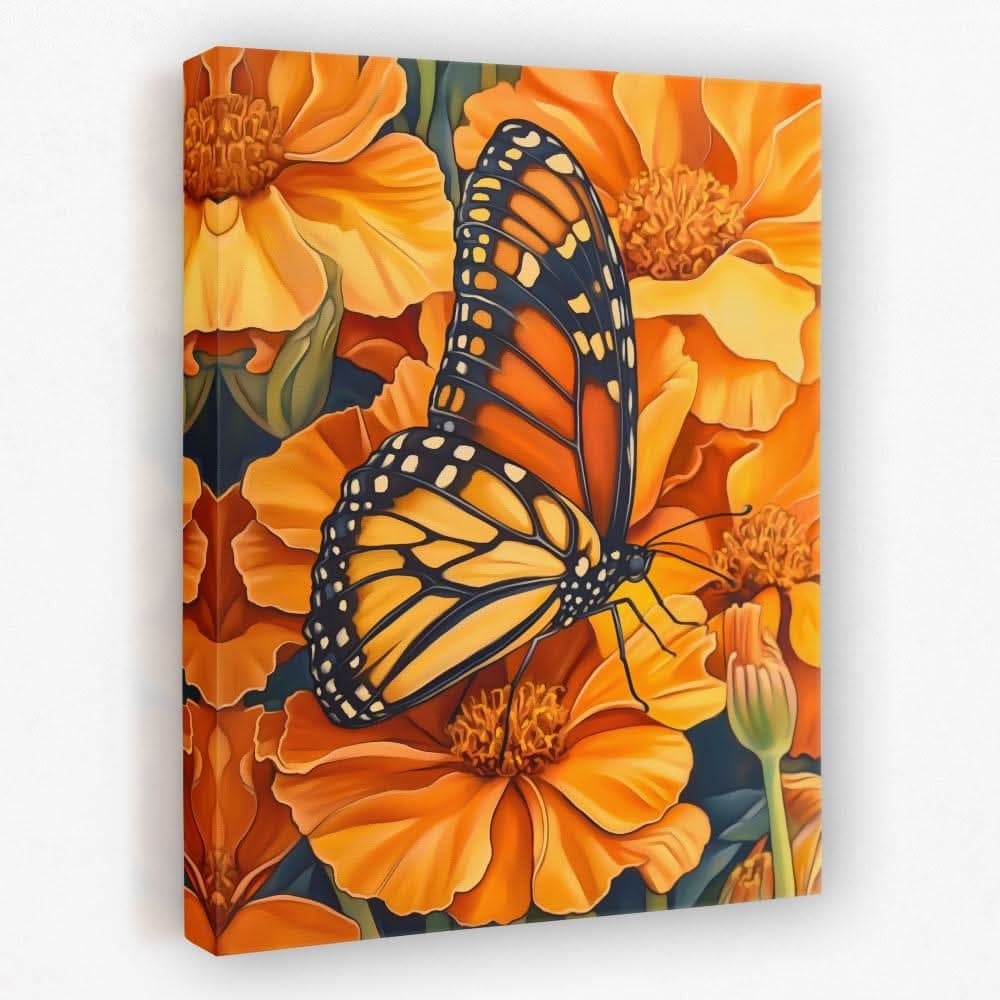

Most home offices end up with one of two problems. Either the walls are completely bare and the room feels like a holding cell, or they are cluttered with random frames that pull your eye in ten directions. Neither helps you get anything done. Office wall art, chosen with a little thought, sits somewhere in the middle. It gives your eyes a place to rest, sets the tone of the room, and quietly tells anyone on a video call that you take your space seriously.
This is not about filling space. It is about picking pieces that work with how you actually use the room. Below is a practical breakdown of what art does for a workspace, the styles that hold up over long workdays, what to hang behind you on calls, how to size a piece above a desk, and the color choices that tend to help (or hurt) your concentration.
What art actually does for a workspace
A blank wall gives your brain nothing, so it wanders. A wall stuffed with busy detail gives it too much, so it snags. A single well-placed piece does something useful in between. It creates a focal point you can glance at between tasks, which is a real thing your eyes need after staring at a screen. It also sets a mood the second you walk in, and mood is half the battle when you sit down to work.
There is a second job too, and it is the one people forget. Your office wall is now a backdrop. Every video call frames you against whatever is behind you, and a thoughtful piece of home office wall art reads as competent without you saying a word. Bare drywall or a stack of moving boxes sends the opposite signal.
Styles that hold up over long workdays
Not every style belongs in a place where you spend eight hours. The art you want here is art you can live next to without getting tired of it. A few categories do this well:
- Abstract. Soft shapes and color fields give your eye something pleasant without a story to follow. That makes abstract wall art easy to glance at and just as easy to ignore when you need to lock in.
- Motivational, done quietly. Skip the giant block-letter hustle posters. A subtle piece that suggests ambition reads better than a slogan shouting at you. Cheesy fades fast. Restraint does not.
- Black and gold. For a premium, executive feel without trying too hard, dark tones with gold accents are hard to beat. They photograph well on calls and pull a room together.
- Minimalist line art. Clean single-line drawings keep walls calm. Good for small offices where anything heavy would crowd the space.
- Cityscapes. A skyline gives a sense of scale and movement, which works if your room feels boxed in. Pick one with a calmer palette so it does not compete with your monitor.


What to hang behind you on video calls
The camera flattens everything, so what looks fine in person can look like noise on screen. A few rules keep your backdrop clean. Pick one larger piece rather than a scattered cluster, since small frames turn into visual static at webcam resolution. Hang it slightly off-center behind your shoulder, not dead center behind your head, where it looks like a halo. And keep the palette calmer than you might in person, because cameras exaggerate contrast.
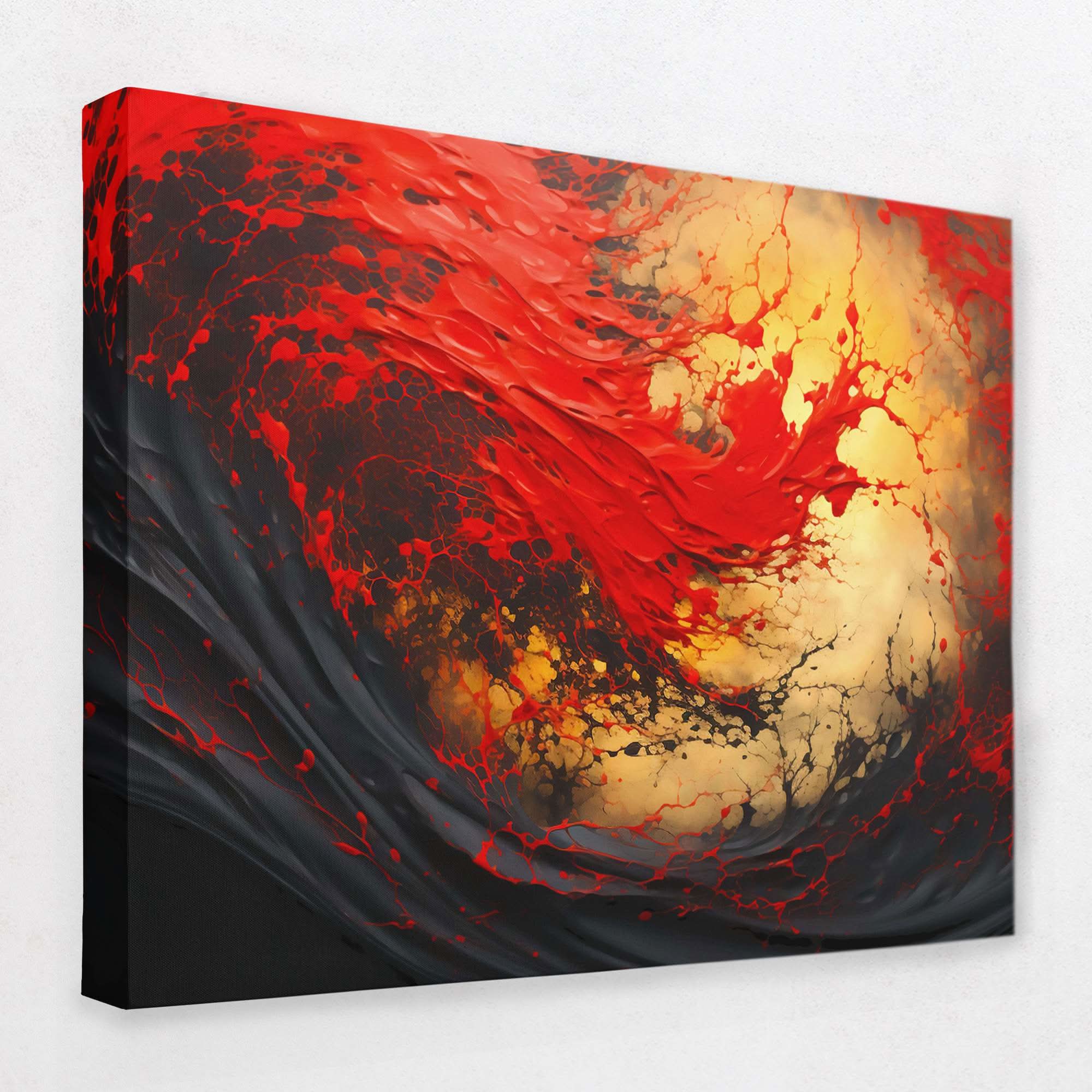
Darker, richer pieces tend to win here. A black and gold canvas gives depth behind you and never washes out under bad office lighting, which is more than you can say for pale watercolors that disappear on camera.

Deep black ground with gold detail holds up under harsh office lighting and reads sharp on a webcam without washing out.
View this pieceBefore your next call, open your camera app and look at the actual frame, not the room. Move the piece up or down until it sits in the upper third behind your shoulder. That one adjustment does more for how you look on screen than any filter.
Art style by office goal
Different rooms have different jobs. If you are not sure where to start, match the art to what you actually need the space to do.
| Goal | Best art style | Why |
|---|---|---|
| Focus | Abstract in blue or green | Cool color fields give the eye a calm resting point without a story to chase, so attention snaps back to the screen. |
| Calm | Minimalist line art, soft neutrals | Low contrast and open space keep the room quiet, which suits long sessions and small offices. |
| Ambition | Black and gold, subtle motivational | Dark tones with gold accents read as drive and confidence without a loud slogan getting old by week two. |
| Video-call backdrop | One larger black and gold or muted cityscape | Richer pieces hold depth on a webcam and stay sharp under typical office lighting instead of washing out. |
| Energy | Bold color as a single accent piece | Warm pops lift a flat room, but kept to one piece they energize without running the space hot all day. |
Sizing a piece above a desk
The most common mistake is going too small. A postcard-sized print floating over a wide desk looks lost. As a rough guide, art above a desk should span about two-thirds to three-quarters of the desk width. So a 60-inch desk wants a piece (or a set) in the 40 to 48 inch range.
- Single large canvas. Simplest option, and the cleanest look. Center it over the desk with the bottom edge roughly 8 to 10 inches above the desktop so it does not crowd your monitor.
- Set of two or three. Good for wider walls. Keep even spacing (around 2 to 3 inches between panels) and treat the group as one block when you measure.
- Height. Aim for the center of the piece at roughly eye level when seated, since that is where you will see it most.
If you are unsure, cut the canvas shape out of paper and tape it up for a day. Cheap, and it saves you from a wasted hanging hole.
You can also skip the guesswork with a few free tools. Drop a piece onto your own wall with the room visualizer to see art behind your desk before you buy, run the art niche finder to land on a style that fits how you work, and check the size calculator to get the right span above the desk on the first try.
Color psychology for productivity
Color is not magic, but it does nudge how a room feels, and over a full workday those nudges add up. A few patterns are worth knowing:
- Blue. Calming and steadying. It takes the edge off a high-pressure room and suits work that needs sustained focus.
- Green. Balanced and easy on the eyes. Good for long sessions because it does not fatigue you the way hot colors can. Pairs well with rooms that get real daylight.
- Gold and warm metallics. Read as ambition and confidence. A little goes a long way, which is why gold works best as an accent against a darker ground rather than the whole piece.
- Red and bright orange. Energizing in small doses, exhausting in large ones. Keep these to accents unless you want a room that runs hot all day.
If your work needs calm focus, lean blue or green. If you want the room to feel driven and a bit luxe, a touch of gold artwork against deep tones does the job.
Home office versus corporate
The two are not the same brief. A corporate office usually wants neutral, brand-safe pieces that will not offend a client or date quickly. Abstracts, muted cityscapes, and quiet geometric work all fit there. A home office is yours, so you can push further: a bolder color, a piece that says something about you, a backdrop that makes you look the part on calls.
The one thing both share is that the art should support the work, not fight it. If a piece keeps grabbing your attention mid-task, it belongs somewhere else in the house. Save the conversation-starters for the living room.
More office wall art picks


Mistakes to avoid
- Going too small. The number one error. When in doubt, size up.
- Too many tiny frames. A gallery wall of small pieces becomes visual clutter behind you on calls and behind your monitor while you work.
- Hanging it too high. Office art creeps up the wall far more often than it sits too low. Center near seated eye level.
- Loud slogans. Motivational text that yells gets old by week two. Pick mood over message.
- Ignoring the light. A glossy piece opposite a window will glare on camera and in person. Matte canvas behaves better in a working room.
Get one good piece on the right wall and the whole room reads differently, both to you at the desk and to whoever is on the other end of the call. If you want a starting point, the home office collection is a good place to find something that earns its spot on the wall.